Understanding Key Performance Indicators (KPIs)
In today’s competitive business landscape, growth isn’t just about ambition. it’s about measurement. Without clear metrics, it’s difficult to know whether your efforts are truly driving progress. That’s where Key Performance Indicators (KPIs) come in.
KPIs are measurable values that indicate how effectively a company is achieving its key business objectives. Whether you’re running a small startup or managing a large enterprise, KPIs help you translate big-picture goals into actionable and trackable results.
Let’s explore how to set measurable KPIs that can guide your business toward long-term success.
1. Start with Clear Business Goals
Before you can measure performance, you need to define what success looks like for your business.
Ask yourself:
- What do we want to achieve in the next quarter or year?
- How does this align with our broader mission?
For instance, if your goal is to increase customer retention, your KPIs might include customer churn rate, repeat purchase rate, or Net Promoter Score (NPS). Every KPI should tie back to a clear and specific business objective.
2. Apply the SMART Framework
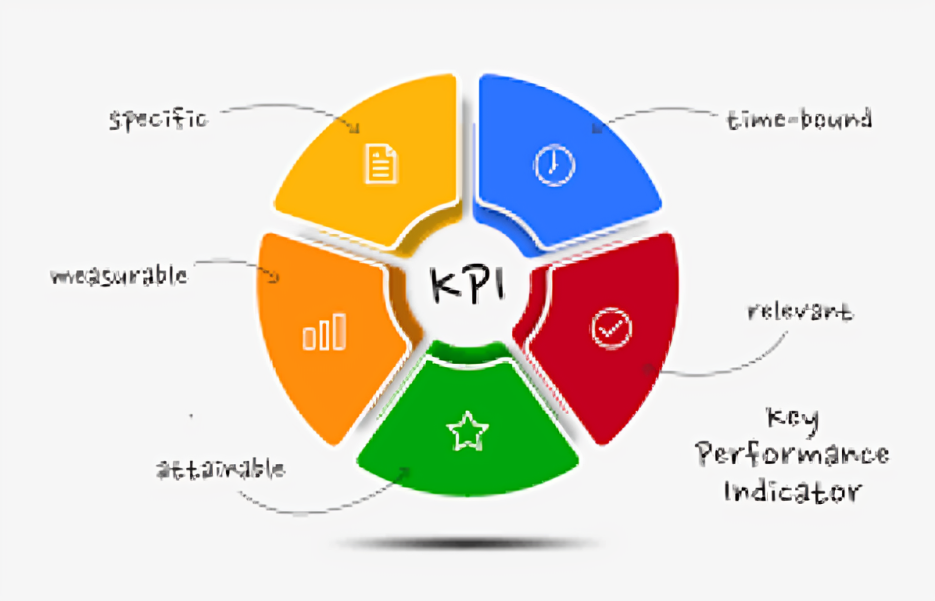
Effective KPIs are SMART—Specific, Measurable, Achievable, Relevant, and Time-bound.
- Specific: Clearly define what you’re measuring.
- Measurable: Attach numbers or percentages to track progress.
- Achievable: Ensure your targets are realistic based on available resources.
- Relevant: Align KPIs with your company’s strategic priorities.
- Time-bound: Set a clear deadline for achieving results.
✅ Example:
Instead of saying “Increase website traffic,” set a SMART KPI like “Increase website traffic by 20% over the next three months.”
3. Identify the Right Metrics for Each Department
Each business area requires different KPIs. What’s important for marketing may not be the same for operations or finance.
Examples of department-specific KPIs:
Enjoying this article? Share it with your network!
- Marketing: Conversion rate, cost per acquisition (CPA), social media engagement rate.
- Sales: Monthly revenue growth, lead-to-customer ratio, average deal size.
- Operations: Production efficiency, order fulfillment time, inventory turnover.
- Customer Service: Response time, first-contact resolution rate, customer satisfaction score (CSAT).
When every department measures what matters most, you create a balanced view of business performance.
4. Focus on Quality Over Quantity
It’s tempting to track everything—but too many KPIs can dilute focus. Select 3 to 5 key metrics per goal that truly represent success.
For example, if your objective is to improve profitability, tracking profit margin, customer acquisition cost (CAC), and average order value (AOV) might give you more actionable insight than 15 loosely related numbers.
5. Use Tools and Dashboards for Real-Time Tracking
Data-driven decision-making becomes easier when your KPIs are visible and regularly updated. Tools like Google Data Studio, Power BI, Tableau, or even Excel dashboards can help visualize progress.
Automate reporting where possible and schedule regular KPI review meetings to assess trends, discuss challenges, and refine strategies.
6. Reassess and Adjust Regularly
Business environments change, so should your KPIs. What worked last quarter might not be relevant today. Periodically review your metrics to ensure they still align with your company’s goals and market conditions.
Adaptability is key. Adjust targets or introduce new KPIs as your business scales or pivots.
KPIs are more than just numbers, they’re a compass that guides your business decisions. By setting measurable, relevant, and actionable indicators, you create a framework for continuous improvement and accountability.
When done right, KPIs transform data into insight and insight into growth. So, define your goals, choose your metrics wisely, and start measuring what truly matters.