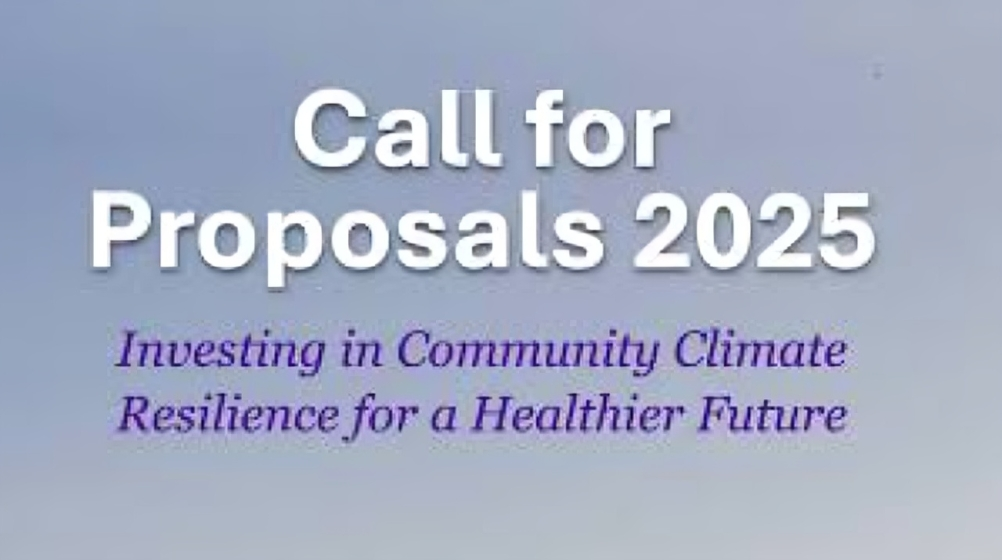
Application Deadline: 28 November 2025
Climate change poses the greatest health challenge of our time, disproportionately affecting lowand middle-income countries (LMICs). Extreme heat and air pollution, two of the most pressing
climate-related threats, are linked to rising rates of illness, premature death, and strained health
systems. By 2050, climate change could cause 14.5 million additional deaths and impose $21
trillion in health costs. Vulnerable populations, including women, children, older adults, outdoor
workers, and those living in poverty, are most severely impacted.
Foundation S’ 2025 Climate Action & Health Resilience Grants Programme will support
innovative, community-led solutions to strengthen resilience against the health effects of
extreme heat and air pollution in LMICs. The programme prioritises projects rooted in local
communities, led by women and young people, and designed to benefit the most vulnerable,
notably women and children. Eligible initiatives may include strengthening community health
systems, embedding innovative approaches such as AI or early warning systems, and applying
scientific research to scalable, evidence-based solutions.
Funding of €50,000–€100,000 per project per year will be awarded for a minimum of 12 and a
maximum of 24 months. Proposals must allocate at least 80% of budgets to local activities
and demonstrate sustainability, replicability, and alignment with government or municipal
systems. Applications open on 30 October 2025 and are due via the Cybergrants platform by 28
November 2025, 23:00 CET.
What we are looking for
Successful proposals will be aligned with the following approaches:
- Proposals that directly support local efforts to address extreme heat and/or air
pollution. - Projects developed, implemented, and led by community-based organisations to
help vulnerable communities adapt to the health impacts of extreme heat and/or air
pollution. - Innovative local solutions, mature or not, that have the potential to be impactful and
deployed at larger scale. - Projects that include an embedded research component. This can include, but is not
limited to, generation of community driven data collection or analysis, quantitative health
outcomes achieved, monitoring and evaluation systems, and the potential for
sustainability and replicability. - Projects that incorporate a strategy to strengthen local capacity for long term
resilience and community health system strengthening. This includes but is not limited to
the appropriate transfer of knowledge, expertise and applicable resources as they pertain
to the programme, particularly when the applicant is not a local organisation. - Projects with partners that can provide complementary funding, expertise, data
quality control, evidence analysis, sustainability and replication - Proposals that emphasise synergy with local municipalities/government-led efforts
- as an essential part of capacity building and sustainable responses to climate impacts
- on health.
- Applicants which have not been already supported in previous funding cycles will be prioritised.
- Given the significant number of submissions we receive, we are unable to provide individual
- feedback for projects that were not selected.
Eligibility criteria
a) Profile of applicants
The following categories of organisation are eligible for funding under this call for proposals:
Enjoying this article? Share it with your network!
- Community based organisations (organisations that are based in the local
district/area/region where the intervention will be implemented and where the impacts of
climate change are apparent) - Local NGOs, networks of civil society organisations with a local, sub-national or national
reach - National, regional, international NGOs demonstrating local community involvement at
all levels of the project (from strategy to implementation)
b) Geographical focus
This call for proposals is focused on programmes in the following countries. Applicant
organisations must be based in the country for which they are applying: - Africa: Benin, Burkina Faso, Cameroon, Chad, Ghana, Madagascar, Malawi, Mauritania,
Nigeria, Rwanda, Senegal, Togo, Zimbabwe. - Asia: Cambodia, Laos, Nepal, Pakistan.
c) Focus of budget expenditure
A minimum of 80% of the proposed budget must be directly allocated to activities carried
out within the local area of implementation.
Click HERE to Apply
Do you need professional help for this application? Click HERE
Disclaimer: Edfrica does not have direct influence nor guarantee the outcome of this application following the support you receive from us