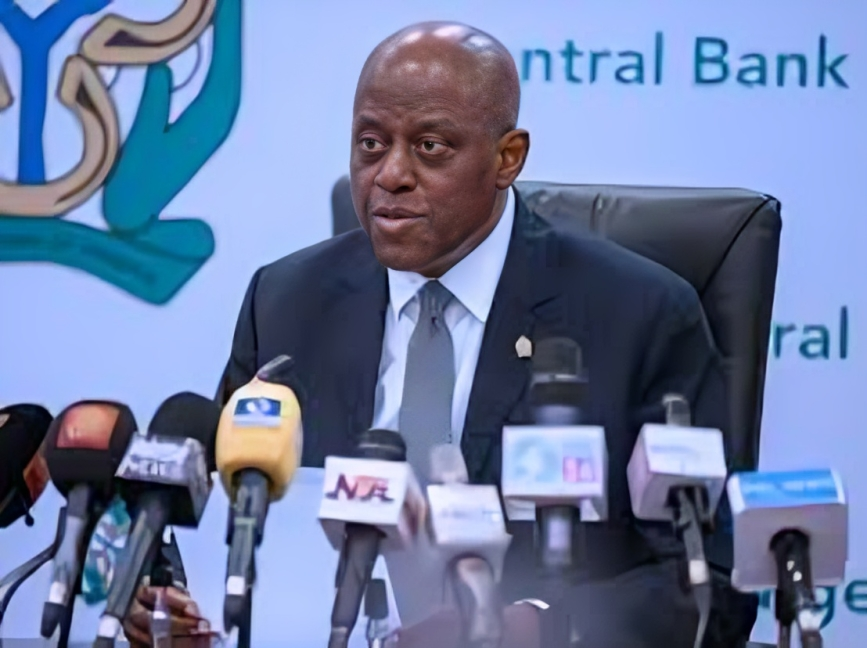
Nigeria’s Central Bank has trimmed the Monetary Policy Rate (MPR) to 27 per cent, the first cut in five years and the maiden policy change of 2025 following three consecutive holds. The move, unveiled after the 302nd Monetary Policy Committee (MPC) meeting in Abuja, reflects a cautious attempt to stimulate recovery as inflation trends downward.
CBN Governor Olayemi Cardoso disclosed that all 12 committee members backed a 50-basis-point reduction from 27.5 per cent. He explained that the cut was underpinned by five straight months of declining inflation, an improved outlook for price stability, and the pressing need to spur economic growth. Nigeria’s headline inflation slowed to 20.12 per cent in August from 21.88 per cent in July. Food inflation also eased to 21.87 per cent from 22.74 per cent, while core inflation dropped to 20.33 per cent from 21.33 per cent. Month-on-month inflation sharply moderated from 1.99 per cent in July to 0.74 per cent in August.
“This is the first rate cut under my tenure and the first in half a decade,” Cardoso remarked, recalling the last reduction in September 2020 when the MPR was lowered from 12.5 per cent to 11.5 per cent. Alongside the headline decision, the MPC adjusted the Standing Facilities corridor to +250/-250 basis points, lifted the Cash Reserve Requirement (CRR) for commercial banks to 45 per cent, kept merchant banks’ CRR steady at 16 per cent, and introduced a new 75 per cent CRR on non-TSA public sector deposits. The Liquidity Ratio was left unchanged at 30 per cent.
Nigeria’s step mirrors a broader African shift toward monetary easing. Ghana recently slashed its policy rate by 350 basis points to 21.5 per cent, while Kenya lowered its benchmark to 9.5 per cent in August. Despite this move, Nigeria continues to hold one of the continent’s steepest interest rates.
Stronger macroeconomic fundamentals also emboldened the MPC. GDP expanded by 4.23 per cent in Q2 2025, compared with 3.13 per cent in Q1, propelled mainly by a 20.46 per cent surge in the oil sector, up from 1.87 per cent previously. Improved security in oil-producing areas was credited for the rebound. Rising oil output is expected to fortify external reserves and stabilize the naira. Foreign reserves grew to $43.05 billion by September 11, up from $40.51 billion in July, covering 8.28 months of imports. The current account surplus also widened to $5.28 billion in Q2 from $2.85 billion in Q1.
Cardoso confirmed that 14 banks have already met the recapitalisation thresholds, adding that the financial system remains sound, with industry indicators within required benchmarks. Looking forward, the MPC forecast continued disinflation backed by exchange rate stability, declining petrol prices, and harvest season dynamics. The next meeting is set for November 24–25, 2025.
Nonetheless, the Organised Private Sector (OPS) insists the cut falls short of what is required to truly unlock credit for businesses. The Manufacturers Association of Nigeria’s Director-General Segun Ajayi-Kadir argued that producers require single-digit borrowing rates—closer to five per cent—to drive output growth. “No bank can lend below the MPR, so financing remains out of reach for most manufacturers,” he emphasized, urging for bolder adjustments.
Enjoying this article? Share it with your network!
The Nigeria Employers’ Consultative Association echoed this concern, warning that restrictive measures like the elevated CRR could water down the benefits of the cut. Director-General Adewale Oyerinde argued that while cheaper credit could boost expansion and job creation, liquidity tightening and high costs may still dampen progress. He also flagged food inflation at 21.87 per cent as a continuing threat to household welfare, urging the government to complement monetary action with structural reforms.
Small businesses raised similar frustrations. The Association of Small Business Owners of Nigeria described the cut as “a promising signal” but “grossly inadequate” for SMEs struggling with capital access. Its president, Femi Egbesola, called for specially designed single-digit loan schemes and alternative financing options beyond traditional banks.
The Centre for the Promotion of Private Enterprise also welcomed the step but emphasized the importance of fiscal coordination. Its Director, Muda Yusuf, maintained that a reduced MPR, combined with a lower CRR, could expand bank lending, ease credit costs, and lift job creation. Yet he stressed that without infrastructure upgrades, regulatory stability, and fiscal discipline, monetary easing alone cannot sustain growth. He also highlighted insecurity as a persistent obstacle discouraging investment and weakening agricultural output.
The Nigeria Labour Congress shared similar sentiments, calling the cut a move in the right direction but insufficient. Assistant Secretary-General Onyekachi Christopher said greater loan accessibility could allow industries to scale, employ more workers, and boost productivity.
Economists acknowledged the cut as a significant policy signal. Professor Sheriffdeen Tella of Crescent University noted that while lower rates reduce production costs, credit remains unattractive since business returns rarely exceed 20–30 per cent annually. Former Zenith Bank Chief Economist Marcel Okeke called the adjustment “the opening of a loosening cycle” in Nigeria’s monetary stance. He predicted banks might trim lending rates by one to two percentage points and suggested additional cuts may follow if inflation trends toward 17–18 per cent.
Okeke added that although the effects of this policy shift will not be immediate, easing rates will gradually improve credit flows and economic activity. He underscored the importance of maintaining exchange rate stability and sustaining disinflation for lasting progress.
Across the business community, the consensus is that the CBN has transitioned from prioritizing stabilisation to focusing on growth. However, stakeholders maintain that to truly unleash Nigeria’s economic potential, interest rates must fall much deeper into single digits. Analysts argue that paired with fiscal and structural reforms, the latest direction could power stronger private sector performance, boost government revenue, and entrench a sustainable path for moderating inflation over the medium to long term.