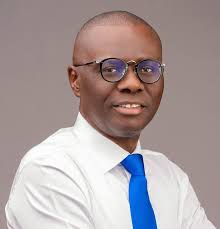
Lagos State Governor, Babajide Sanwo-Olu, has reassured residents and the business community that Nigeria’s recently gazetted tax reforms are structured to support small businesses and protect vulnerable groups, rather than impose additional pressure on low-income earners. The governor gave this assurance while speaking at the Lagos Tax Reform Summit held on Tuesday in Ikeja, where he reiterated Lagos State’s firm backing of the Federal Government’s ongoing tax reform programme.
According to Sanwo-Olu, there have been growing public concerns that the revised tax framework could disproportionately benefit high-income individuals while disadvantaging ordinary Nigerians. However, he dismissed these fears, stressing that the assumptions do not reflect the true intent of the reforms.
“I am aware that some people are worried that these reforms will harm the poor and work in favour of the wealthy. That perception is incorrect. The objective of the new tax law is straightforward: to protect small businesses, ensure that those with greater means pay what they owe, plug revenue leakages, and fairly bring more participants into the tax net,” the governor stated.
Sanwo-Olu praised President Bola Ahmed Tinubu for driving the reform process, describing the measures as courageous and necessary steps toward correcting a tax system he noted had been dysfunctional for many years. He explained that the reforms are not aimed at increasing taxes, but rather at removing multiple taxation, broadening the tax base, and creating a system that is more transparent, efficient, and accountable.
Enjoying this article? Share it with your network!
The governor further reaffirmed Lagos State’s readiness to collaborate closely with federal agencies to implement the reforms in a manner that supports economic growth, equity, and certainty. He noted that as one of Nigeria’s major economic centres, Lagos is deliberately positioning itself to convert policy initiatives into tangible benefits for residents, entrepreneurs, and corporate organisations.
During the summit, which was organised by the Office of the Special Adviser on Taxation and Revenue in collaboration with the State Treasury Office, stakeholders examined ways to align revenue administration in Lagos with the Federal Government’s broader fiscal goals. Sanwo-Olu highlighted that the new tax reforms would help curb revenue leakages, minimise duplication in tax collection processes, and improve overall accountability in public finance management.
Tax and economic experts at the event noted that consistency and clarity in tax policy are critical for boosting compliance and attracting investment, particularly for micro, small, and medium-sized enterprises (MSMEs). These businesses depend heavily on predictable fiscal policies to plan effectively, secure financing, and expand operations. Earlier proposals within the reform framework include several exemptions and relief measures for low-income earners and small businesses, such as corporate income tax waivers for enterprises below defined thresholds and expanded personal tax reliefs.
Sanwo-Olu’s comments come amid ongoing national discussions surrounding the new tax regime, which is scheduled to commence on January 1, 2026. While certain stakeholders have expressed reservations about aspects of the gazetted legislation, proponents of the reforms, including state leaders like Sanwo-Olu, maintain that inclusive stakeholder engagement and strong implementation will be critical to ensuring the reforms deliver meaningful benefits to citizens and businesses across the country.