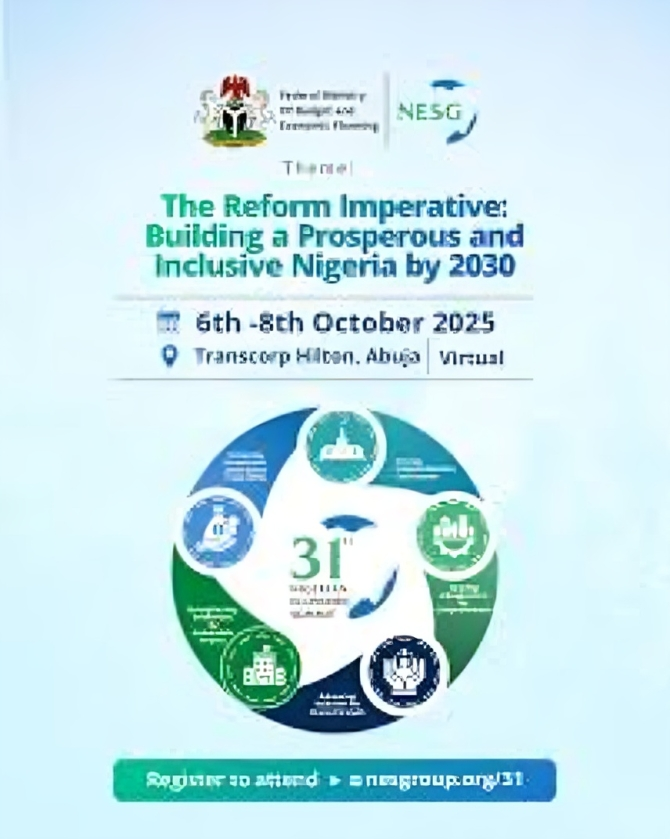
The Nigerian Economic Summit Group (NESG), in collaboration with the Federal Ministry of Budget and Economic Planning, has once again emphasized the pivotal role of Micro, Small, and Medium Enterprises (MSMEs) in driving inclusive economic growth, generating employment, and reducing poverty across the nation.
During a pre-summit dialogue centered on subnational reforms for MSME development, stakeholders examined how state-specific initiatives are gradually opening new opportunities for small businesses. Practical examples from Lagos, Enugu, and Plateau States were showcased, illustrating what becomes possible when state governments actively prioritize enterprise growth. In Lagos, affordable loans offered at single-digit interest rates have achieved strong repayment outcomes, proving that small businesses are bankable when granted equitable access to credit. Enugu has leveraged a data-driven system to expand grant accessibility and improve transparency in distribution, while Plateau has strategically placed MSMEs at the heart of its employment generation agenda, positioning small enterprises as active economic drivers rather than marginalized informal actors.
Key recommendations from the dialogue revolved around four major priorities required to expand these gains nationwide. The first is the consistent provision of affordable financing, complemented by robust financial literacy programmes to ensure businesses utilize capital effectively. The second is the establishment of comprehensive data systems that not only strengthen policymaking but also simplify entrepreneurs’ access to support. Third is the elimination of regulatory bottlenecks at state and local levels that continue to hinder business growth. Lastly, participants highlighted the importance of reinforcing value chains through skills training and digital transformation, enabling MSMEs to remain competitive in today’s fast-evolving economy.
The dialogue underscored that replicating and scaling these reforms across all states in Nigeria would unlock the untapped potential of MSMEs, enhance productivity, and guarantee sustainable development. With millions of small enterprises contributing across diverse sectors, the adoption of consistent grassroots-focused policies could become a decisive factor in building resilience, fostering innovation, and deepening economic inclusion.
Enjoying this article? Share it with your network!
Importantly, the lessons derived from Nigeria’s experience hold broader relevance for other African countries confronting similar challenges. Regional or state-led reforms that are responsive to local contexts can provide the supportive environment required for small businesses to grow, formalize, and create enduring employment. By embedding MSMEs at the core of national development agendas, African economies stand to strengthen value chains, widen shared prosperity, and reduce vulnerability to external shocks.
This pre-summit dialogue has set the stage for the forthcoming national economic summit, where MSMEs are expected to occupy a central role in discussions on economic transformation. With coordinated action and deliberate efforts to scale successful models, Nigeria is positioning small businesses not merely as contributors but as the engine room of national and continental economic growth.