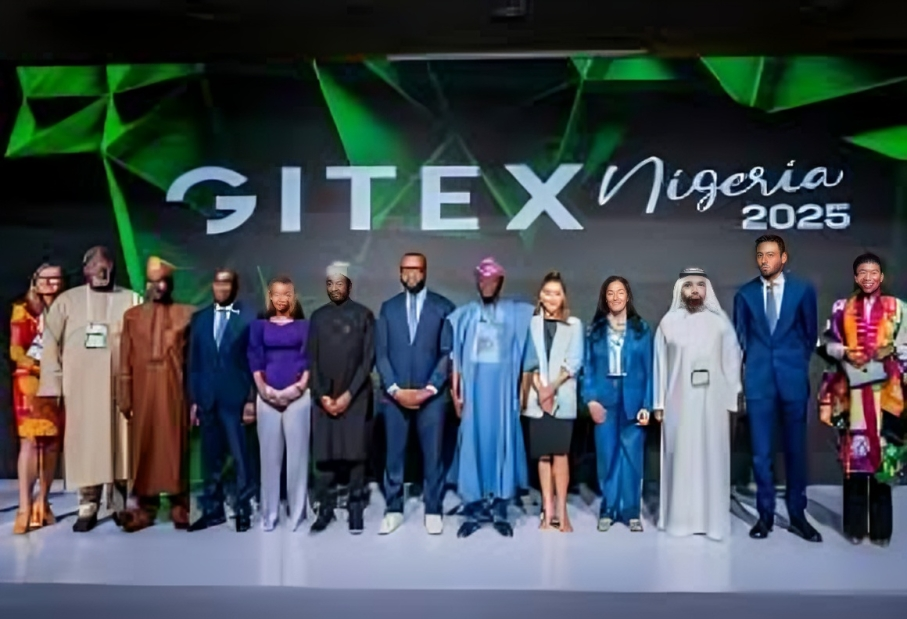
Nigeria has taken a groundbreaking step in its digital transformation journey by hosting its own edition of the Gulf Information Technology Exhibition (GITEX), one of the world’s most influential technology showcases. After over a decade of consistent participation in GITEX events across Dubai, Marrakech, and Berlin, the nation has now brought the global stage home.
The international exhibition, which opened this week in Abuja, marks a defining moment for Nigeria’s innovation landscape. The event convened government leaders, policymakers, global investors, technology multinationals, and startups on one platform designed to promote collaboration, accelerate innovation, and consolidate Nigeria’s role as Africa’s top technology hub.
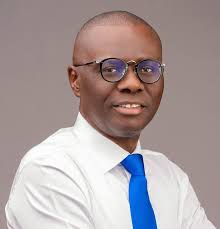
At the Lagos segment of GITEX Nigeria, the state governor revealed that Lagos alone has secured more than $6 billion in direct foreign investment for its startup ecosystem between 2019 and 2024. He emphasized that this achievement affirms Lagos not only as Nigeria’s economic engine but also as Africa’s epicenter of innovation. According to him, the city accounts for over 70 percent of Nigeria’s total technology inflows and has been instrumental in nurturing more than 70 percent of Africa’s unicorn companies.
The governor underscored Lagos’ emergence as a thriving digital ecosystem, strengthened by hyperscale data centres, submarine cable infrastructure, and a state-wide fibre optic connectivity network. He attributed this progress to decades of visionary planning, crediting the early integration of digital systems as the backbone of today’s achievements.
He cited the Blue Line rail system, which has now been operational for two years and uses the Cowry Card, a unified payment platform developed by young innovators in Lagos. The card integrates payments across buses, taxis, trains, and waterways, demonstrating that locally developed solutions can effectively drive large-scale infrastructure.
He added that Lagos has transitioned into a governance model that is fully digital, inclusive, and driven by data. Through platforms like the Lagos Digital Service Platform, residents can access transportation, healthcare, and other public services seamlessly. He further noted that Lagos has maintained a Science and Research Fund for more than six years, offering grants ranging from ₦50 million to ₦80 million to startups—some of which went on to design exhibition stands at GITEX Nigeria.
The Minister of Communications, Innovation and Digital Economy elaborated on Nigeria’s broader digital agenda. He pointed out that while ICT contributed less than 5 percent to GDP a decade ago, it now consistently accounts for 16 to 18 percent, with expectations to hit 21 percent by 2027. He described Nigeria as more than a technology market, but a global creative and innovation powerhouse fueled by infrastructure, talent, and culture.
Enjoying this article? Share it with your network!
Highlighting the Nigerian Stock Exchange, he noted that technology companies have surpassed oil firms as top performers, signifying a fundamental restructuring of the economy. He also stressed Nigeria’s cultural strength—where Nollywood dominates global screens and Afrobeats fills international arenas—describing this blend of technology and creativity as the essence of Nigeria’s innovation identity.
To further accelerate progress, he announced major national projects such as Project BRIDGE, a 90,000-kilometre fibre backbone aimed at connecting every ward in the country, and the 3MTT programme, which he described as the world’s largest coordinated digital skills initiative. He also revealed that new landmark legislation—the National Digital Economy Bill and the E-Governance Bill—will soon be introduced to reinforce accountability, security, and trust across Nigeria’s digital space.
The Executive Vice President of Dubai World Trade Centre and CEO of KAOUN, co-organisers of GITEX globally, praised Nigeria as a model of resilience and creativity. She observed that unlike Silicon Valley, where ambition often drives innovation, Nigerian startups innovate out of necessity—an approach that enables them to scale rapidly and remain resilient. She referred to Lagos as a “mega high-speed testbed” for innovation, adding that any solution proven in Lagos could succeed anywhere globally.
She disclosed that the debut edition of GITEX Nigeria attracted more than 650 startups, 200 investors, and delegates from over 40 countries. She encouraged participants not to be disheartened if immediate capital was not secured, stressing that the real benefits are in the networks, knowledge, and long-term positioning for global opportunities.
GITEX Nigeria represents more than the unveiling of a new trade fair. It signals a movement placing Nigeria at the forefront of Africa’s technology and innovation revolution. With strong government backing, growing private sector investments, and an energetic youth-led ecosystem, Nigeria is no longer just a participant in the global technology race—it is an architect of the future.
The unified message from Abuja and Lagos resonates clearly: the future has already arrived, and it carries a distinctly Nigerian identity.