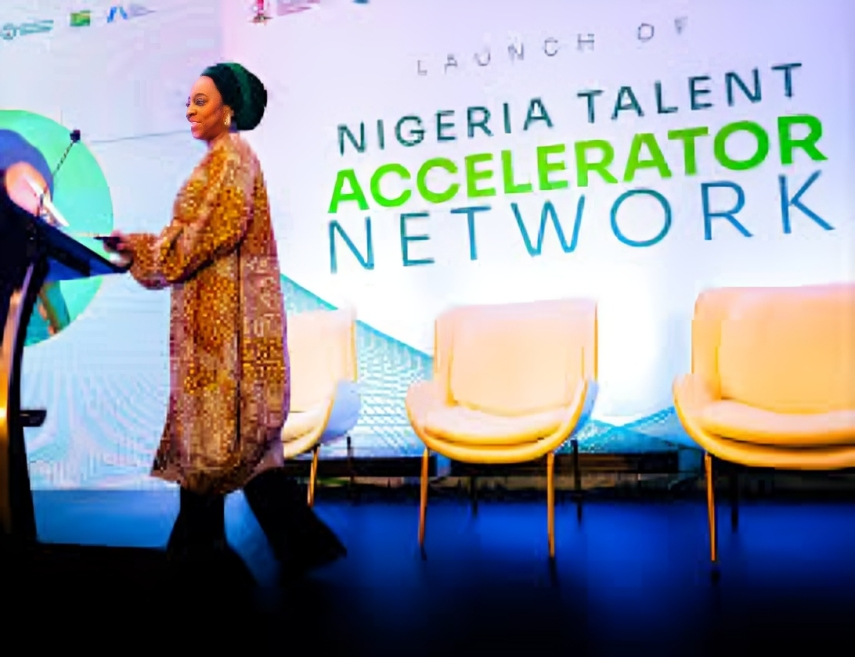
Nigeria has unveiled the Nigeria Talent Accelerator Network under the World Economic Forum’s Reskilling Revolution, a strategic initiative designed to enhance workforce capacity, bridge productivity gaps, and prepare citizens for the future of work.
The programme brings together the government, private sector, academia, and civil society to jointly develop scalable reskilling and upskilling solutions for Nigerians. It focuses on building digital, green, and transferable skills that align education with labour market demands, positioning the country as a competitive global talent hub. Co-chaired by the Federal Ministry of Industry, Trade and Investment and the Federal Ministry of Education, and coordinated by the National Talent Export Programme (NATEP), the initiative marks Nigeria’s entry into the World Economic Forum’s Global Accelerators Network.
At the launch event, Minister of Industry, Trade and Investment, Dr. Jumoke Oduwole, described the initiative as “a bold step towards creating a globally competitive workforce capable of driving Nigeria’s next phase of industrialisation and innovation.” She added that the platform will “bridge policy, industry, and education” to boost employability, productivity, and inclusive economic growth.
Similarly, Minister of Education, Dr. Maruf Alausa, reaffirmed the Ministry’s commitment to integrating education and vocational training with labour market realities. “We are ensuring that Nigerian youth are equipped with the future-ready skills needed to compete globally,” he said.
Teju Abisoye, the National Coordinator of NATEP, explained that the Accelerator will strengthen collaboration among stakeholders to co-design and scale workforce development solutions. “This initiative ensures that Nigeria is not just adapting to the future of work but helping to shape it. We are developing a coordinated strategy to close talent gaps and explore new opportunities for talent export,” she noted.
The programme will prioritise reskilling and upskilling in key growth sectors such as technology, business process outsourcing, and green industries. It will also mobilise public-private partnerships to finance and expand workforce initiatives, enabling Nigerians to transition into high-demand professions while building data-driven systems to forecast emerging skill needs.
Enjoying this article? Share it with your network!
Saadia Zahidi, Managing Director of the World Economic Forum, praised Nigeria’s proactive leadership in advancing workforce development. “By investing in human capital, Nigeria is positioning itself to meet domestic labour demands while contributing innovation and expertise to the global economy,” she said.
Nigeria’s participation in the Reskilling Revolution demonstrates its strong commitment to human capital development, digital inclusion, and innovation-led growth. The Talent Accelerator complements ongoing national reforms focused on economic diversification, strengthening the innovation ecosystem, and fostering inclusive prosperity.
The World Economic Forum’s Reskilling Revolution aims to deliver better education, skills, and economic opportunities to one billion people worldwide by 2030.
Meanwhile, the National Talent Export Programme (NATEP)—established to make Nigeria a global hub for service exports and talent sourcing—supports President Bola Tinubu’s job creation agenda, which targets the generation of one million in-demand jobs within five years.
Beyond employment creation, NATEP is also expected to attract foreign exchange through talent exports, boost state revenue through taxation, and promote sustainable economic growth driven by innovation, trade in services, and workforce competitiveness.